Personal Archives
Welcome Home, Emmet
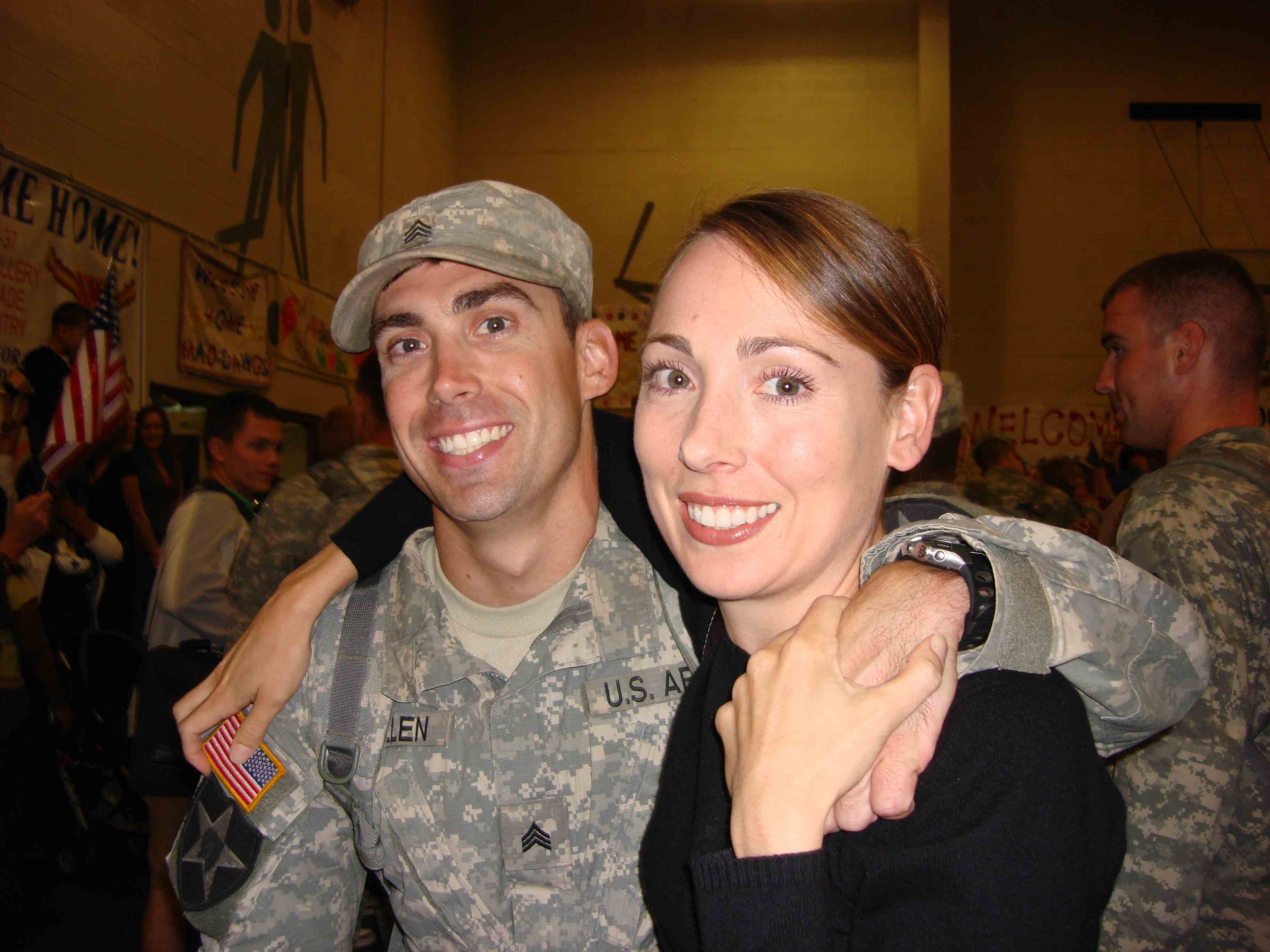
My brother is home safe from Iraq and done with the Army. Now if only we could all be done with George Bush.

September 21, 2007 · 08:46 PM · Personal · Comments (0)

July Fourth
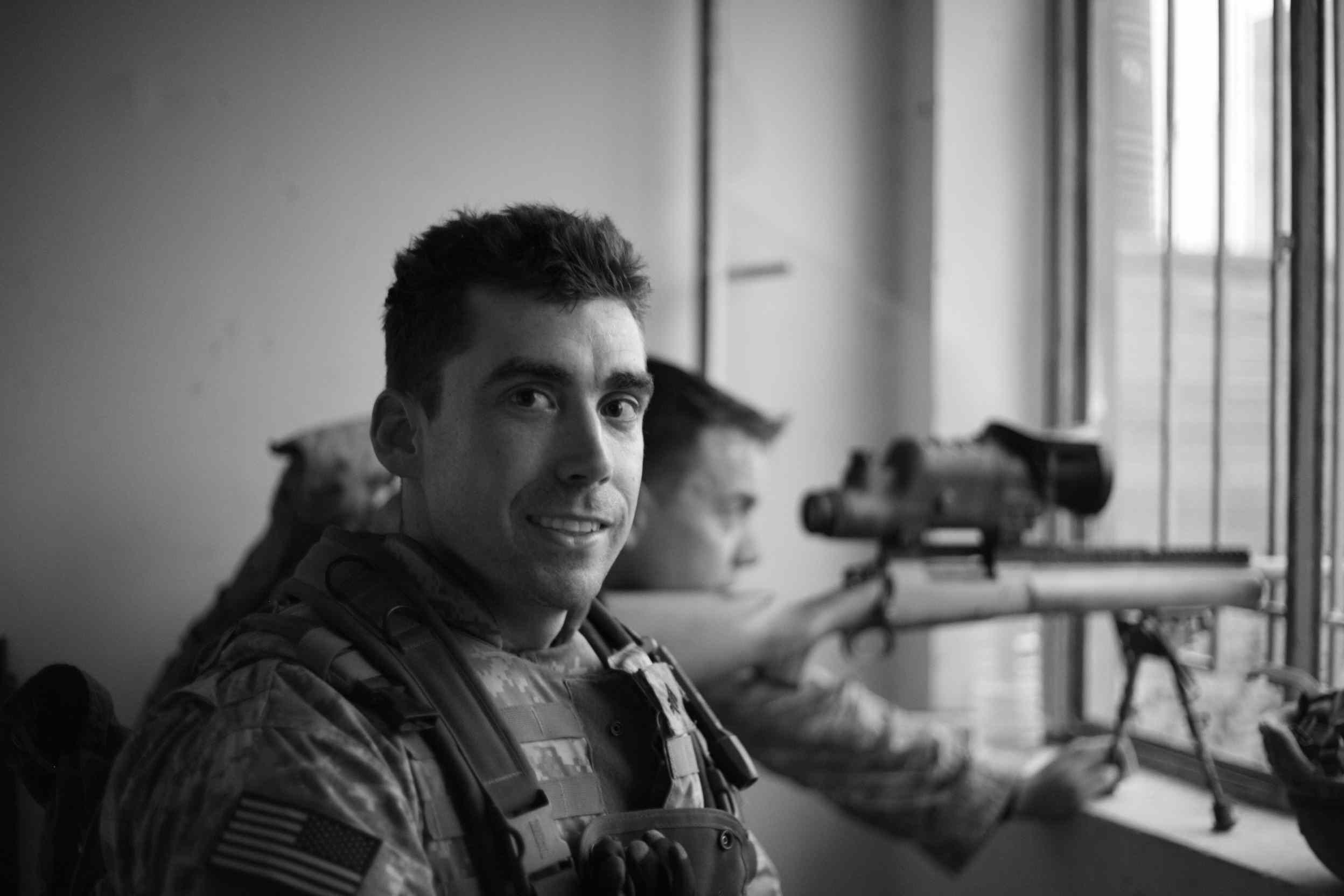
While we're having our barbecues, our soldiers are on the streets of Baghdad. My brother Emmet Cullen, a sniper with the Army's Stryker Brigade, tells me via email that he's doing night patrol today. He'll finish his second tour of duty this September after having his year-long deployment extended three months under the "troop surge" strategy. He's an aspiring photojournalist and is trying to capture what he sees in Iraq.
Here's Emmet:
And here are some of his recent photos. You can see more of his work here.
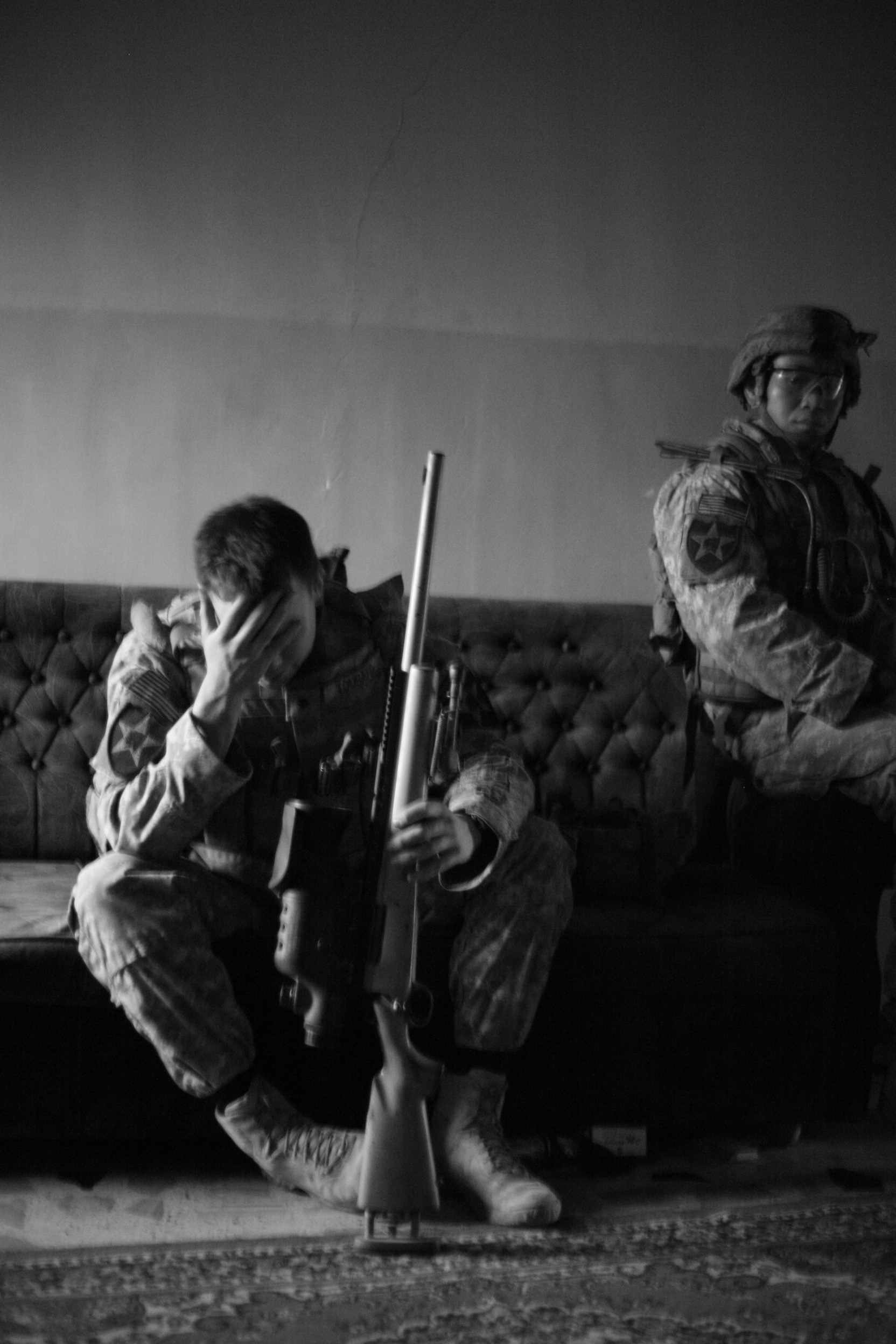
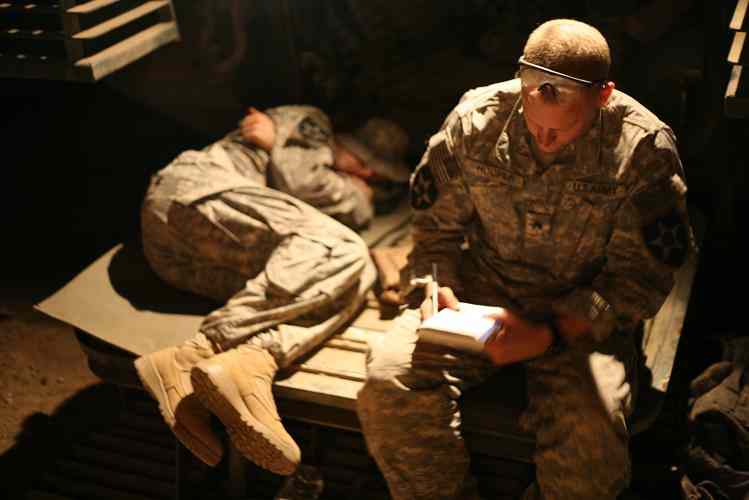
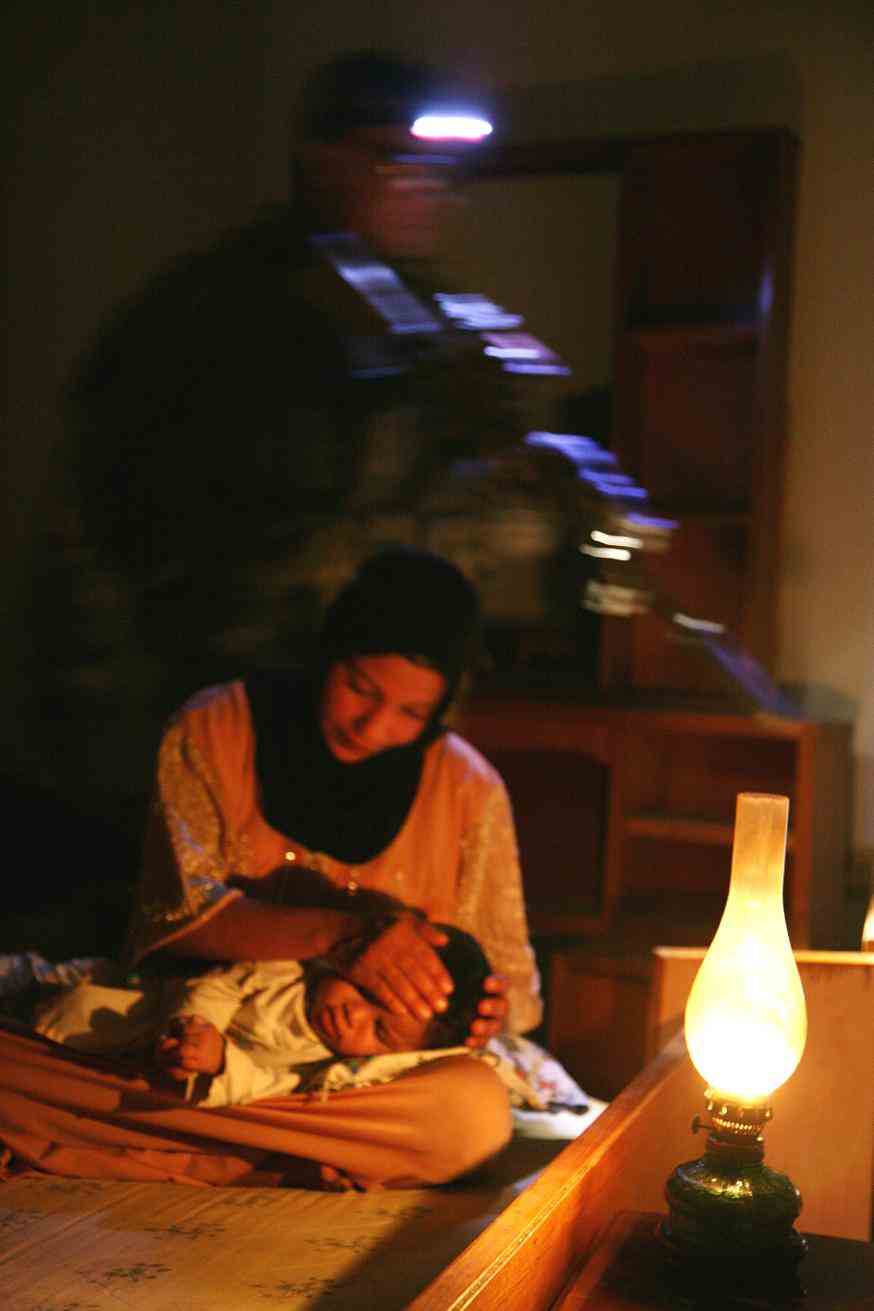
All images copyright Emmet Cullen.
I doubt anyone still needs the reminder, but remember our soldiers, and the people of Iraq, today.
July 04, 2007 · 11:29 AM · Personal · Comments (0)
Happy Birthday, Emmet
My brother Emmet, an Army sniper currently on his second tour to Iraq, turns 25 today.
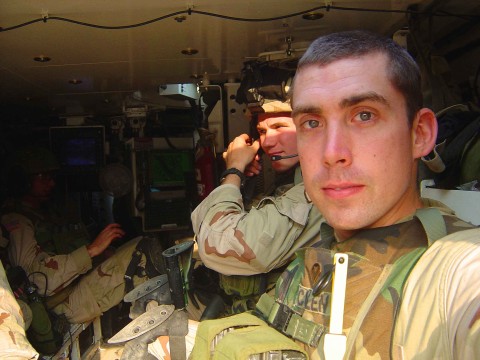
Happy birthday, Emmet! Six months to go--can't wait to have you home.
December 16, 2006 · 02:55 PM · Personal · Comments (0)
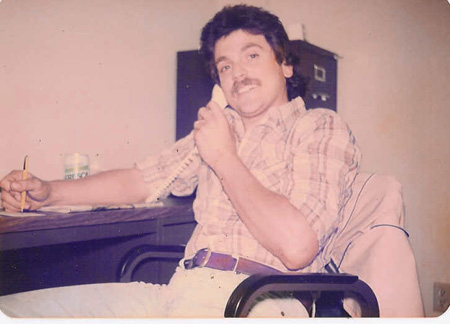
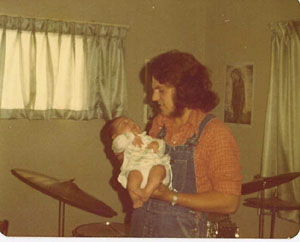
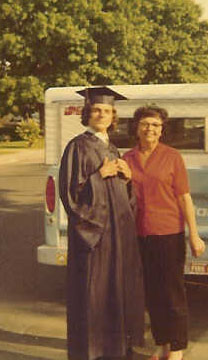
Today is the 20th anniversary of my father's death.

June 22, 2006 · 10:45 AM · Personal · Comments (3)
Clemency
As the debate over Tookie Williams' death sentence has roiled, I've hesitated to publicly register my opinion. I've shied from the dangers of using my experience as the daughter of a murder victim as a moral trump card. And yet the classic hypothetical in the capital punishment debate is "What would you want if a member of your own family had been killed?"
Since childhood I've been able to answer this question without pause. I would not want whoever murdered my own father killed. I have chosen to find my own ways of reaching resolution and peace without calling for revenge. I believe threats to society should live out their days behind bars, and that horrifying crimes deserve just punishment. But I would never want blood on my hands.
I want to say this with absolute respect and caring for others who have lost family members and friends to murder. It is a harrowing experience those untouched by murder cannot fully understand. The daughter of one of Stanley Tookie Williams' victims, Albert Owens, has said she wants Williams executed. Her brother wants to see his father's murderer live, granted he continues to live in prison. These are deeply personal feelings to be accorded the utmost empathy. But capital punishment is not a personal decision; it defines not an individual's moral stance, but a society's. And as the execution date nears, I am in absolute agreement with this Los Angeles Times editorial, published in October:
"STANLEY "TOOKIE" WILLIAMS is a charismatic symbol of what's wrong with the death penalty — and of what's wrong with the debate about the death penalty. His story of sin and redemption powerfully illustrates the unfairness of capital punishment. But to argue that capital punishment is unjust for some defendants is to concede that it may be acceptable for others.
The reason to oppose capital punishment has to do with who we are, not who death row inmates are. The death penalty is inappropriate in all situations because it is unbefitting of a civilized society. Williams' case, though poignant, is irrelevant to this argument . . .
California, which has executed only 11 people since 1976, should give up on capital punishment altogether, like 12 U.S. states and most of what is often referred to as the "civilized world." Gov. Arnold Schwarzenegger should cancel Williams' execution, scheduled for Dec. 13, and Williams should spend the rest of his days in jail. So should everyone else on death row — even those who haven't had their lives turned into a TV movie. "
UPDATE: It has been difficult for me to read the coverage of Stanley "Tookie" Williams's execution, not because I believe his life should have been spared--although, as a death penalty abolitionist, I do--but because I feel the full horror of the murders he committed has been lost in the hoopla over his purported redemption. It seems I read only of two camps: Those who want state-sanctioned vengeance, and those who believe he was a hero. I do not believe he was a hero. I can picture the reality of the murders he committed only too clearly. I wish the media would clear space in this debate for those remain unconvinced of Williams' redemption and yet oppose state execution. I believe the deepest argument against the death penalty acknowledges the full horror and pain of a murderer's actions--and yet still chooses not to kill in revenge.
December 08, 2005 · 04:14 PM · Personal · Comments (1)
St. John the Divine
It was chance that put me at the Cathedral Church of Saint John the Divine yesterday, September 11. I’m in New York on business this week, and since I was baptized Episcopalian three years ago I have always meant to see the Cathedral during a jaunt to Manhattan. I lost no friends or family on September 11 and can’t claim to have come to St. John’s out of a memorializing impulse. So I was neither expecting nor prepared to be so moved.
To begin with, the church is gorgeous, and in a completely unexpected way. It’s Gothic in style, and one of the largest Cathedrals in the world, of course, but four years ago much of it was damaged in a fire, and strangely this has only made it more beautiful. The back of the church has been boarded up, the end of the nave now marked not by ornamented stone but by gray-painted plywood. This has a stunning inadvertent effect when you enter and gaze down the row of impossibly lofty arches: You seem to be looking straight through a portal to the unknown, the incomprehensible. Because of the fire, there are no pews, and the displays of tapestries and fineries are surprisingly sparse. Instead, in the back corner of the church, rusty wood-and-metal school chairs have been placed in the round. The altar stands in the middle, atop a rather rickety makeshift platform. An ornate lectern has been rolled in as though from the half-struck set of some opera. The Cathedral’s Great Organ, installed in 1910 by no less an organ craftsman than Ernest M. Skinner, has been silenced by smoke damage. A digital electronic organ makes do.
And yet St. John the Divine still does everything “high church”: Glittering vestments, every possible word of liturgy set to music, clouds upon clouds of incense. And as if this weren’t testament enough to the perseverance of the sacred in the face of destruction, the day’s service posed the message so eloquently that at half a dozen moments I thought I might cry. I was in too meditative a frame of mind to take notes, and so can’t quote from the sermon by the Reverend Canon Storm Swain, or the remarks by the New York Fire Department chaplain who welcomed uniformed men and women from an early morning memorial at Riverside Park. But I can let pieces of the service speak for themselves:
From the first hymn:
Mortal pride and earthly glory,
Sword and crown betray our trust;
Though with care and toil we build them,
Tower and temple fall to dust.
But God’s power,
Hour by hour,
Is my temple and my tower.
From the collect:
Hear our prayers this day as we remember those of many nations and faiths whose lives were cut short by the fierce flames of anger and hatred. Hasten the time when the menace of war shall be removed. Cleanse both us and those perceived to be our enemies of all hatred and distrust.
From the solo sung at offertory by New York City Opera soprano Verda Lee Tudor, with text by St. Francis of Assisi:
Lord, make me an instrument of Thy peace;
Where there is hatred, let me sow love;
Where there is injury, pardon . . .
It is in pard’ning that we are pardoned.
It is in dying that we are born to eternal life.
I have a persistent and painful nihilistic streak, and I attend church every Sunday not because I am faithful but because the Anglican church is the only way I have found to counter this, to persuade me to see meaning in the world. (My deep-seated nihilism is also, I have realized in recent years, the reason I write: My need to create meaning is in direct proportion to my fear that life is devoid of it.) In recent weeks the nihilism has mostly overcome any inclination toward spirituality. Last week I watched footage of the New Orleans floods with my husband, and we turned to each other and bantered back and forth: A force that is all-powerful, all-knowing, sees everything you ever do and, oh yes, loves you—right! Ha! But listening to the words at St. John the Divine, watching the incense rise like pure spirit from the altar, hearing the fireman’s chaplain say that we are all broken, but in Christ’s broken body we are made whole—I felt again the profundity of religious symbolism, and I crossed myself during the final blessing feeling that life was far richer than the mental reductions I’d been making of it.
On my way out of the church I spotted the “Poet’s Corner,” and read every carved stone there, scribbling resonant quotations onto my service leaflet.
Thoreau: Be it life or death, we crave only reality.
Dickinson: Captivity is Consciousness—so’s Liberty.
Frost: I had a lover’s quarrel with the world.
Edith Wharton: There is no end to life in its mercy or its pain.
And my favorite, from William Deans Howells:
Ah, poor Real Life, which I love!
September 12, 2005 · 07:13 AM · Personal · Comments (2)
Here's the second half of my Chronicle essay about my brother.
I got to Instant Message with him the morning. He's been practicing photography, with some skill, I think, and he sent these photos:


He's been doing incredibly tough work lately. I'm proud of him. He also may be up for a medal for a difficult dive he took into the Tigris River a few months ago to recover some ammo caches. The Santa Barbara News-Press carried a great write-up about it on Monday with nice photos of him, but unfortunately the article isn't available online.
I first wrote about Emmet on this website last year, as my mother and I were preparing for his departure to Iraq. I thought it worth providing a link to that short essay, with photos, here.
June 01, 2005 · 03:18 PM · Personal · Comments (0)
Memorial Day
My brother Emmet, an Army sniper stationed in Mosul, Iraq, has to be having his best Memorial Day ever. To begin with, the Santa Barbara News-Press has a front-page article today about the risky dive he took into the Tigris River a few months ago to recover insurgent weapons caches. On top of that, if you pick up the San Francisco Chronicle today, you'll find several pictures of my brother, and the first part of a personal essay I wrote about his visit back to California on 15 days' leave last February:
" My brother's job is to kill people. He's a sniper with the U.S. Army, an occupation that fills me with a mix of unease and admiration. But never have I felt more intensely conflicted than when he returned to California on 15 days' leave from Mosul, Iraq.
He was the same Emmet, only buffed. He zipped up the street on his tricked-out mountain bike, dismounting with unruly grace. He'd grown his hair well past Army-regulation length -- it was fuzzy on the sides, like a puppy's. Frayed cut-off corduroys stopped short of chiseled calves; a green T- shirt stretched across his muscled chest. He grinned with that brand of wry mischief that has always made my mother and me do whatever he pleased.
He hugged my mother, and she rubbed his head and said, "Your hair's getting awfully long." She was smiling -- with pride, and probably with relief that Emmet had raced over to see us.
Mom and I had already lost two days of his leave. Emmet chose to land in Santa Barbara, where he was staying with friends. My mother, Aleta, a night nurse in Merced, couldn't get out of work and I was living in San Francisco. The moment her shift ended, we'd hurried south together to my in-laws' house, our agenda simple: to fulfill Emmet's every whim, and hope that he would make time for us before heading back to a country where insurgents shot at him every day. "
When my editor Leba Hertz first asked if I'd like to write about Emmet's leave, I wasn't sure I could do it: It was too raw and overwhelming, and my emotions were too conflicted. I didn't want to write anything that would damage my brother's morale. But I had to be as honest about my unease as I was about my pride. It was a difficult piece to write. I was able to Instant Message with my brother this morning. He read the piece online over in Mosul and likes it.
To read the full essay, click here. Part two will run in the Chronicle's Datebook section tomorrow.
May 30, 2005 · 11:50 AM · Personal · Comments (0)
Just picked up the new Amy Hempel short story collection and am rubbing my hands at the chance to jump into it this evening.
My novel is beginning to show signs of improvement--it's still a mess, mind you, but I'm starting to see how it could be better. So in an effort to lengthen my compromised attention span, I won't be posting much this week. I will however be reviewing Yuri Possokhov's new work for San Francisco Ballet, which I've been looking forward to for months, for the Chronicle. And I'll be trucking down to Palo Alto to check out a handful of the explosion of activities Stanford has scheduled to coincide with the Merce Cunningham Dance Company's visit under their Encounter: Merce banner. I've also got quite a few other freelance journalism projects up my sleeve. So don't expect to hear from me here, but see you at the theater.
March 07, 2005 · 08:12 PM · Personal · Comments (0)
Nostalgia
I’m heading to exotic Fresno today for my tenth anniversary high school reunion, and then to Santa Barbara for a raucous Halloween doing “research” in Isla Vista, the college ghetto attached to the University of California there.
In Fresno I’m promised two giddy nights with five former colorguard girls and threatened with a viewing of the “video yearbook” (do I really have to look back on my fluffy bangs and once-unplucked eyebrows?). Since I think I could pass the rest of my life without returning to Fresno and not feel the slightest pang of regret, this trip is all about good company—and the strange lure of a solitary four-hour drive. I’ve got my Ipod car adapter plugged in and ready to go. In heavy rotation today: the second movement of Grieg’s Piano Concerto in A minor as performed by Leif Ove Andsnes, who had me on my feet with most of the audience at Davies Symphony Hall the other night; and “Fond Farewell” from Elliot Smith’s posthumous album.
In Isla Vista, I’m expecting 25,000 intoxicated and scantily clad students roving Del Playa, the seaside party strip. Last year I tagged along with a band of students, friends of friends—they had me dress up with them as eighties breakdancers and we toted a boombox and cardboard that we laid in the street and did the caterpillar on. This year, barring a flash of last minute-inspiration, my husband and I will probably be venturing into the mob sans costumes. The funny thing is that I never attended Halloween festivities when I was actually a student at UCSB. I was too terrified by the school’s party culture. Nostalgia works in mysterious ways.
Incidentally, the second Mark Morris Dance Group program at Cal Performances last night was wonderful, particularly the world premiere “Rock of Ages” (set to Schubert’s Piano Trio in E-flat and danced by four strong women, though co-ed and all-male casts are also slated) and 1985’s daffy “Marble Halls” (set to Bach). I’ll post a roundup of reviews and my own thoughts early next week.
October 29, 2004 · 12:48 PM · Personal · Comments (0)
Specs
Another sign that my memoir, The Lost Night, is really happening: It now has an International Standard Book Number. Other specs just settled: It will measure a very portable five and a half by seven and a quarter inches and cost $23.95. I'm told I might see a cover design within a week.
So while the June pub date is still in the offing, it no longer feels an eternity away.
October 20, 2004 · 10:16 PM · Personal · Comments (0)
sport of the arts
And now just for fun . . . Launching this blog has connected me to an old friend in high school, who writes:
“I was reading an email about "SUMMERDANCE" in Santa Barbara and saw that a "Rachel Howard" was reviewing it and had a website. I didn't know if this was the same Rachel that slinked around the floor in 1993 with the rest of us during a fabulous rendition of Sade's work so I checked out your website.”
I am indeed the same Rachel Howard who slinked to Sade a decade ago. But let me explain.
The one question dance critics (particularly if they’re female) are constantly asked is “Are (or were) you a dancer?” Many dance writers, including Deborah Jowitt, Wendy Perron, and Gus Solomons Jr., can answer in the affirmative. Here in the Bay Area, the Contra Costa Times’ Mary Ellen Hunt puts her pointe shoes on for class five days a week.
My own reply is more tentative. I took neighborhood tap/jazz/ballet classes from age four to eight, quit because I wanted to ride horses instead, and returned to ballet (and dabbled in modern) in college. Frankly I was never very good: one of my legs is incurably turned-in, one of my feet won’t point fully, and I hit a solid double pirouette only once in my life. Besides, I prefer writing.
But the real story is this: From eighth grade on, I was a colorguard fanatic. What is colorguard? The shortest answer I can offer, “flag team,” is woefully inadequate. Today’s colorguard is much more evolved—and often bizarre—than those girls in knee-high boots and sparkly vests who used to stand next to the drum line. At Clovis High School, we marched alongside the band in the fall but had our own “Winterguard” productions, performed inside gyms. Three years in a row we traveled to the Winterguard International championships in Dayton, Ohio, where we always made the top twenty.
We spun flags, true. But we also danced, some of us more crudely than others, practicing jazz runs and chassés and grand jetés across the football field or the cafeteria floor. Colorguard began as a competition in military precision, with teams passing before the judging panels with their flags, rifles, and sabers carried in regulation formation. But by the time I joined the “Sport of the Arts” in the late eighties, west coast troupes had introduced dancing, upping the “artistic” ante.
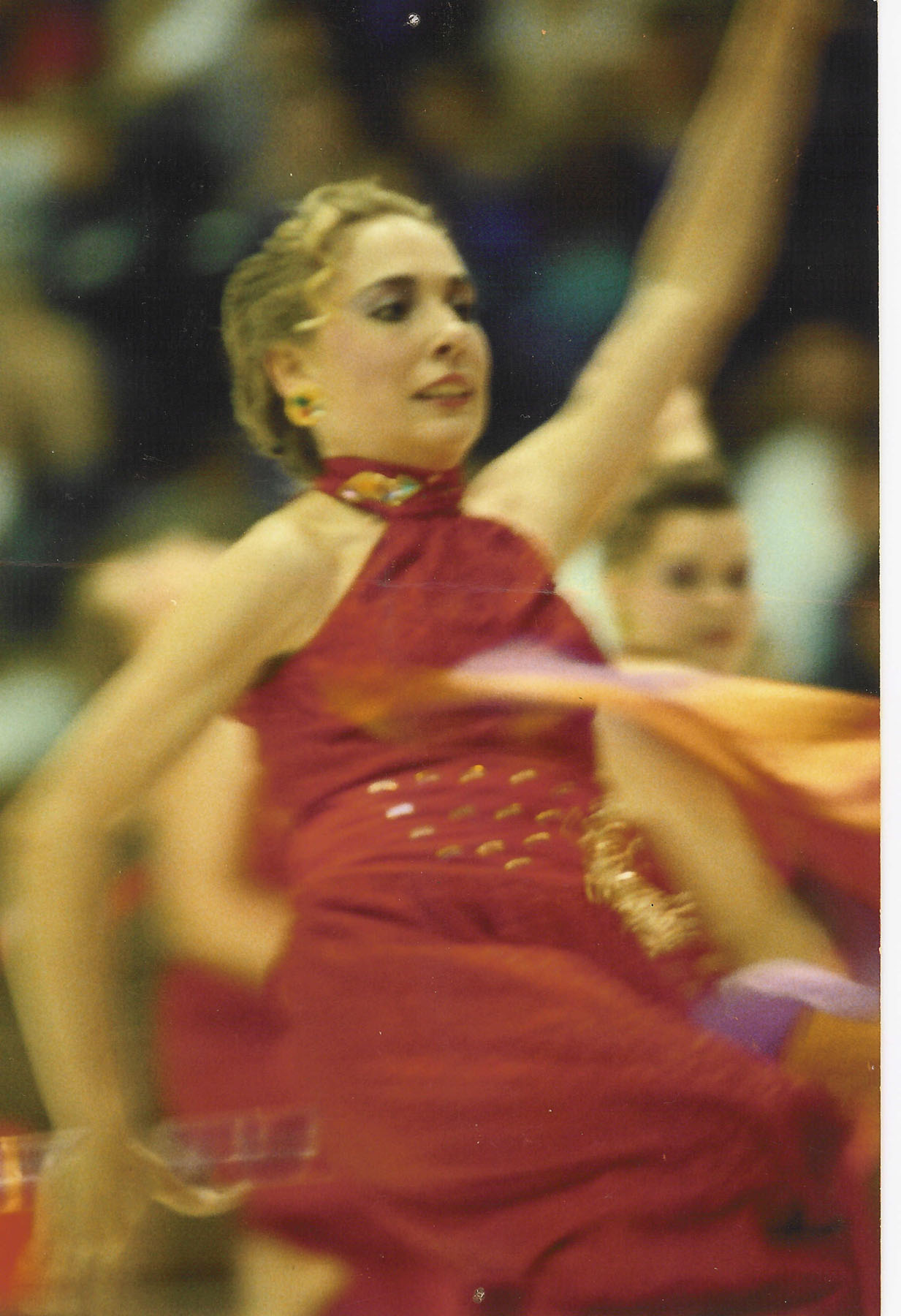
With Clovis High colorguard, 1992 (the year before the Sade show). The supressed terror on my face is because I'm afraid I won't catch the flag pole behind my back.
The year before I entered Clovis High, the colorguard performed a “Swan Lake” to truncated Tchaikovsky, transforming the cygnets' dance with crisp flag tosses. While I was in colorguard I saw routines danced to everything from Edgar Allen Poe’s “The Raven” to Billy Joel’s “Piano Man.” I even remember a rendition of Samuel Barber’s “Adagio for Strings” performed, with flags, en pointe. My senior year of high school, our rivals at Clovis West donned long black dresses and skittered around the perimeter of the basketball court, pausing to pulse their torsos urgently. No one from my school recognized the costumes and the movement as deriving from Martha Graham’s “Night Journey.” We just thought the Clovis West instructors had gone kooky.
The Sade show came my junior year at Clovis High. It was a work of high camp fantasia, designed by a glamorously hip instructor named Marc whose last name, regrettably, now escapes me. We slithered and winked to “Smooth Operator” and “Cherry Pie,” wearing sparkly red pantsuits and enormous falls of fake “Barbarella” style hair. We had a purple vinyl floor with a diamond of white fake fur across which we crawled, suggestively placing our sabers between our teeth. I have the videos to prove it.

Marc's inspiration?
Also in my senior year, I moved up into the “A” corps of the Concord Blue Devils, an independent drum and bugle corps I marched with in the summers. Or should I say the World Champion Blue Devils. We won again that year in Boston, before an enormous, roaring crowd, with “My Spanish Heart,” a show designed to the music of Chick Corea. I was on the saber line that year. I could throw a Marine-style ceremonial sword in the air, watch it rotate seven times, and stop the metal blade dead in my hands before dancing off in a new direction. Ah, the nostalgia! The Blue Devils are gearing up to take the championship field in Denver tonight even as I write this. I’m with them in spirit.
Obviously colorguard wasn’t the School of American Ballet. I couldn’t hold a decent arabesque, but I could twirl a full rotation beneath a saber toss. I didn’t get my dance history until college, but I learned a thing or two about choreographic phrasing, spatial patterns, and the workings of muscle memory. I put in more work than you might imagine (the Blue Devils often practiced from nine in the morning to ten at night, sleeping on hard gym floors as we toured the country). And I had a hell of a lot of fun.
I think colorguard is a fascinating American subculture—kind of marching band meets Cirque du Soleil. Its participants are passionate—until my senior year of high school, I was determined to make a career as a colorguard instructor. Did I take the right route? I think so, but I miss the warm summer evenings with the mosquitoes buzzing around the stadium lights as we prepared for a final run-through. I’d like to write about colorguard someday. I just haven’t figured out how yet.
August 05, 2004 · 11:30 PM · Personal · Comments (1)
It tolls for the froggy

I took this photo at a makeshift pet cemetery tucked away in San Francisco’s Castro Neighborhood. It’s part of a longer story that I will make very short here.
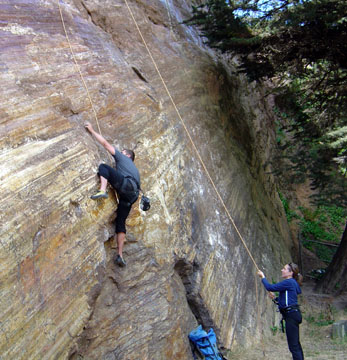
My younger brother Emmet is a sniper with the U.S. Army, an occupation that inspires an uneasy pride in me. He’s scheduled to deploy to Iraq this fall. In June, he got some leave and came to stay with me. He’d just gotten into rock climbing and, via the Internet, had discovered a sharp 80-foot cliff smack in the center of the city. He said we just had to see this spot and enlisted me to help him climb and my mother to videotape.
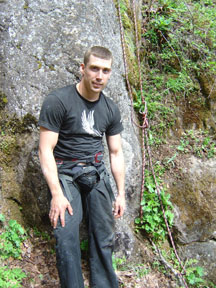
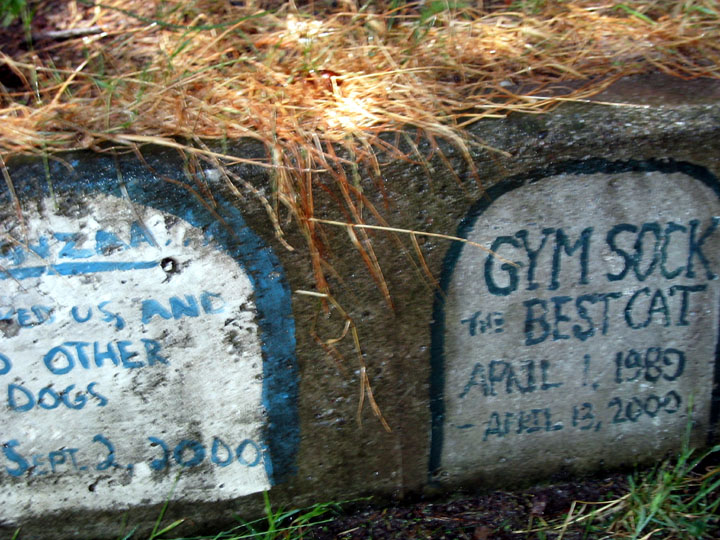
The cliff was stunning, a slick sheet of striated rock fronting a small park. But just as remarkable were the tombstones that had been painted onto a three-foot high concrete wall that shored up the adjacent hillside. The practice had obviously begun at the south end of the park, where locals had painstakingly created memorials to “Gym Sock: The Best Cat” and “Kwanzaa: He hated other dogs, but he loved us.”
But on the north end of the park stood a preschool, and though classes were not in session, it was clear the little charges had taken over the animal funeral business. Their tombstones were drawn with ragged lines, with what looked like chalk, the colors run by the splashing of sprinklers. In their universe, “lower” animals than cats and dogs deserved remembrance: there were gravesites for “Sweetie Rabbit,” “Gopher found by Hope,” “Dead Bird,” and “Baby Mouse.”
My brother scrambled straight up the rock, shoving his feet into tiny crevices, grunting as he reached for a new hold while I held the rope below, ready to halt his fall. He never needed me; he skittered onwards without pause. The climbing he did that day was dangerous—I am not adequately schooled in belay techniques and could easily have made a fatal mistake. But then, nearly everything he does is dangerous. And even as my mother asked “Are you sure you should do this?”, it seemed impossible that day, as it must have seemed to the preschool kids, that any of us could die.
My favorite tombstone was this one: “Sorry that you died froggy.” It says so much about the child’s inability to grasp the full reality of death. I love the implication that death is a cause for simple pity, in the same way you might tell someone you’re sorry to hear they had the flu last week. It almost sounds, reading that grave marker, as though the poor froggy has been unfairly singled out. But perhaps we do owe consolation for death, to the dead as well as the living, even if it comes to every one of us.
July 23, 2004 · 01:02 PM · Personal · Comments (1)